
Day 17
Some thoughts on "changing your life"

The Advent Cal(m)endar contains habits to increase clarity, focus and calmness. Every second day, I open a door and post about my experiences.

Hi readers! Some people finding out about the Advent Cal(m)endar might have thought: Wow, the way towards a calmer life is certainly not to overwhelm oneself with a long list of new “good habits” within just a few weeks! It’s something I have been thinking about a lot – how many habits can we introduce within a short time without it becoming stressful? Why do I need “rules” and “tasks” in order to relax, even though they are clearly reminiscent of stressful to-do lists? These doubts reappeared when I (I am ashamed to admit) forgot the habit of Day 1, meditation, twice in the last few days – am I trying to do too much? So, here are some thoughts…
Should habits aimed at calmness feel like chores?
True habits (i.e. activities that have become second nature) can form in different ways. Some habits might just be expressions of our personalities: Someone who is very neat might automatically prioritise tidying and cleaning their home very regularly. For me, nature is an essential part of life and if I haven’t been for a walk for two days, I automatically crave it, no matter the weather, so walking regularly is a habit I do not need to put much deliberate effort into.
But many habits might not come so easily. They are rather the result of “training”, of repeating the activity regularly even when we don’t feel like it, until it becomes automatic. Because even when we know an activity is good for us, there is often that part of us that just wants to do something else: consume easy entertainment, do what others expect us to do, be “productive”. I feel this most with meditation, to my surprise. A part of me seems to really resist making it a daily habit! As I said, I forgot about it twice, and sometimes I do it half-heartedly, just waiting for the ten minutes to be over. But I still have no doubts that it’s benefitting me – on the good days, it improves my mood or gives me a strong feeling of clarity. So, I am trying to stick with it through the difficult days. Research does not seem to have a straightforward answer to the question of how long it takes to form a true habit, but it is clear that repetition is needed. And it will usually take more than a few days – maybe even more than the 24 days of Advent!
So yes - I think a period where a healthy, calming activity feels like a chore, one more repetitive task added to our already busy lives, is often unavoidable. It only becomes a problem when the added stress of finding time and space outweighs the benefits.
How much of our lives can we change at once?
Of course, the risk of getting overwhelmed by the new “tasks” increases when we try to change multiple aspects of our lives at once. Maybe we should only change one thing at a time? Maybe the overambitious attempt to change everything at once is a reason New Year’s resolutions usually fail? I am not so sure. Of course everyone will have their own preferences, but for me, the great advantage of a “lifestyle reset” is that it gives you a boost of motivation. Ironically, I believe I would do even worse with daily meditation if meditation was my only goal for December. The longer list of habits means December has felt like a new start, and I have improved aspects of my life that were not even on my list – e.g., I decluttered my email mailbox (after years) and cleaned some neglected areas of my apartment. Meditation just fits better into that “new” life than into the rut I was previously in.
How to find the right balance when making multiple changes?
Overall, I feel my list of habits is challenging but not “too much” for me. This isn’t because I am some habit guru who could easily implement any 12 habits within a month – I rather planned my habits carefully to be doable. Here are some principles I used:
Building on existing habits. Many of the activities I included are not completely new to me. I was exercising quite frequently, even if it was sometimes just a ten-minute stretch in the evening, and I meditated and did muscle relaxation exercises from time to time. The “new” habits, therefore, mostly extend or increase the frequency of something I was already doing, which makes it less intimidating.
Including easy habits to increase confidence. I included activities that are relatively simple and quick to do, but that have an immediate positive effect – such as cold showers or getting rid of some recycling. These make me feel accomplished and give me the confidence to also go through with the habits I find more difficult.
Including non-habits. Some of the “habits” on my list are not strictly habits at all – they are rather restrictions (e.g. no work after 9pm, no mindless scrolling). I expected these to be the most difficult ones as they deal with my little “addictions”, and it has indeed taken me quite some effort to constantly remind myself not to scroll and read emails! But the advantage of these “habits” is that they don’t take time – they instead generate more time and therefore reduce stress immediately.
And with this, we are finally arriving at today’s habit – it’s another restriction in line with a set of others aiming at reducing my mindless internet usage:
No more than 20 minutes of YouTube
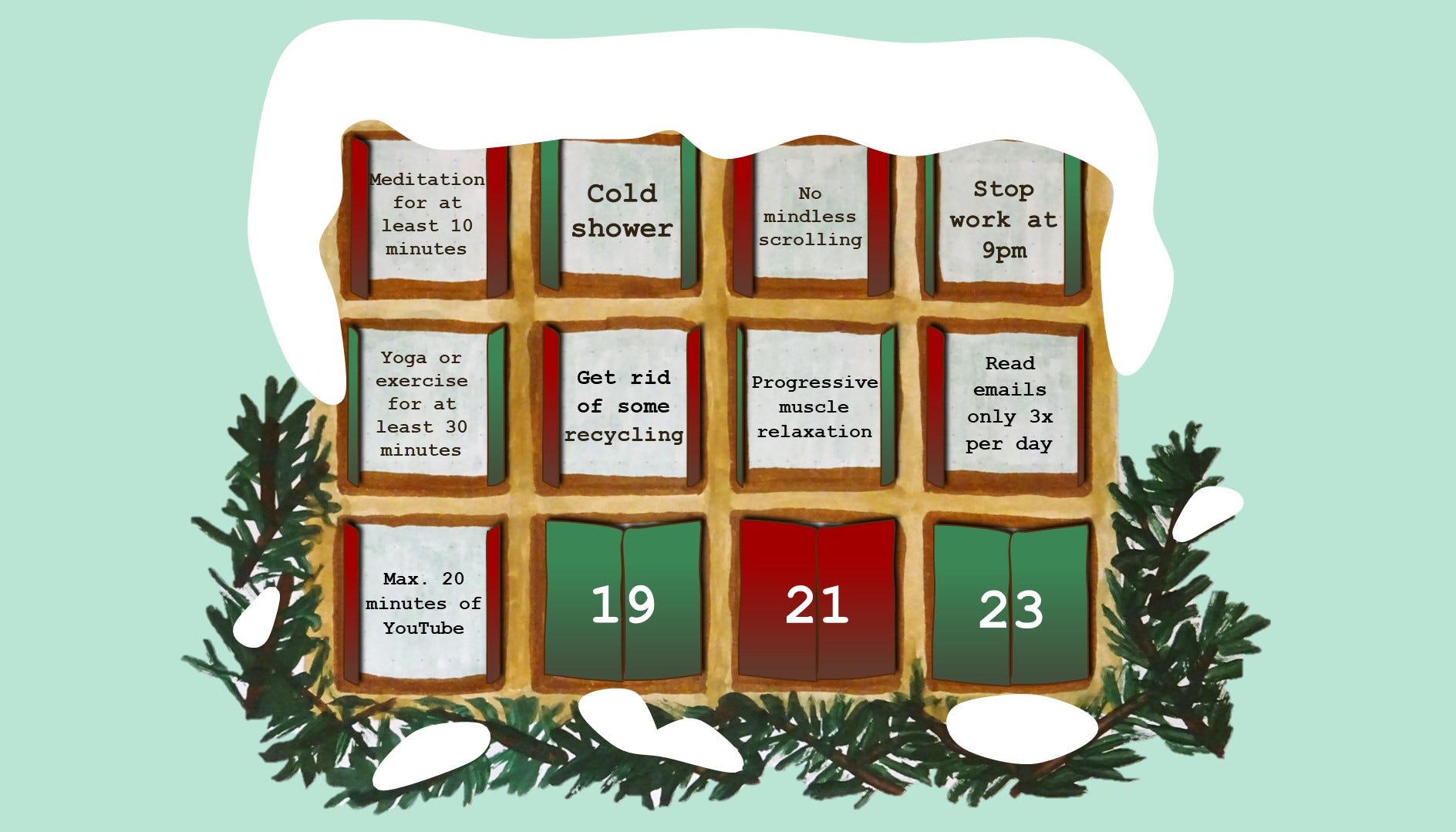
Not much to say about this one (that’s why I chose a different topic for this post…). I love YouTube – it allows me to get a glimpse into the lives of people I share interests with or who live in fascinating places. Their stories give me inspiration and make me feel less alone (as a minimalist and simple life enthusiast who has few real-life friends with the same passions). But far too often I find myself clicking through random videos that don’t add value to my life; so, this month I want to be more mindful about my YouTube usage.
How do you introduce new habits?
I hope you had a great day!
Hannah